

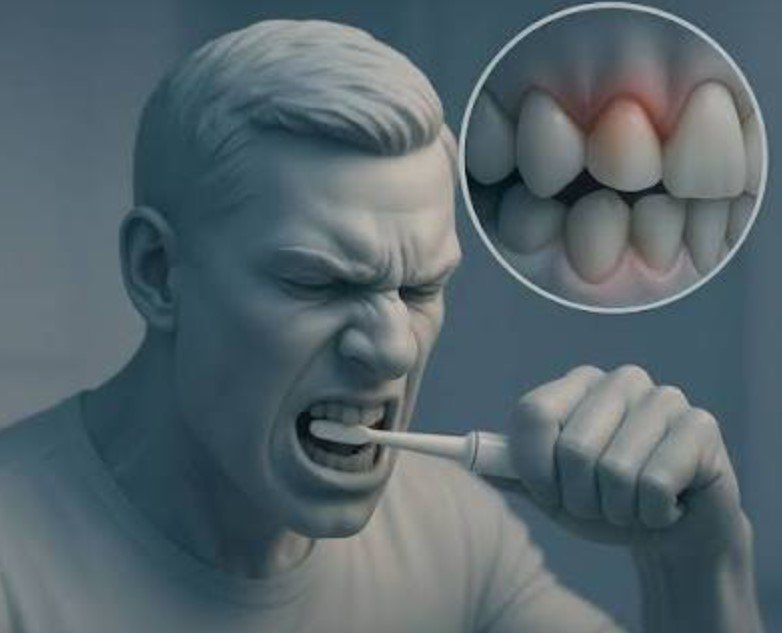
It feels satisfying to scrub your teeth hard, but that “squeaky clean” feeling is often a warning sign. There is a direct, dangerous link between aggressive brushing and receding gums, and many people are literally pushing their gum tissue away from their teeth without realizing it.
You brush twice a day. You floss most days. By every measure you’d expect, your oral hygiene is good — maybe even excellent. So why do your gums look like they’re pulling back anyway?
For a surprising number of people, the answer isn’t neglect. It’s the opposite: brushing too hard, for too long, with the wrong technique. It’s one of the most common and most preventable causes of gum recession — and because it feels like diligence rather than damage, it’s also one of the easiest to miss until the evidence is staring back at you in the mirror.
“Good” Hygiene Habits Can Still Hurt You
It sounds counterintuitive. More brushing should mean healthier gums, not worse ones. But dental research draws a clear distinction between effective brushing and forceful brushing — and they are not the same thing. The American Dental Association notes that overly vigorous brushing, particularly combined with a firm-bristled brush and a horizontal scrubbing motion, is associated with gum recession, tissue injury, and tooth abrasion over time (ADA Oral Health Topics: Toothbrushes). Most people apply more pressure than they realize simply because brushing is such an automatic, unmonitored habit.
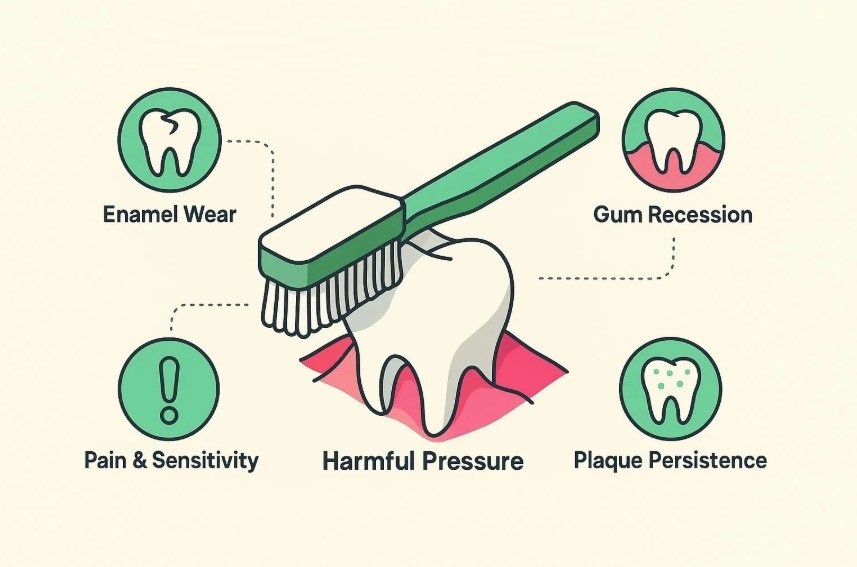
This is called toothbrush abrasion, and it produces two visible effects: a V-shaped notch at the gumline on the tooth itself, and gum tissue that retreats to expose the root underneath.
How Aggressive Brushing Actually Damages Gum Tissue
It’s About Technique, Not Just Effort
The American Dental Association recommends a soft-bristled brush held at a 45-degree angle to the gumline, using short, gentle, vibrating strokes rather than long horizontal scrubbing. The common habit of scrubbing back and forth across the whole tooth surface — especially with a firm or medium bristle brush — is precisely the motion most associated with gumline wear.
Bristle Firmness Makes a Measurable Difference
Hard and medium bristles are more strongly associated with gum recession and tissue injury than soft bristles. This is exactly why the ADA’s standing recommendation is soft bristles for daily use, regardless of how “clean” a firmer brush might feel.
The Damage Looks Different From Disease-Driven Recession
This distinction matters more than most people realize. Recession caused by mechanical wear tends to show up as a localized notch on the facial (cheek-side) surface of a tooth, often on just one or two teeth where brushing pressure is heaviest — frequently on the side opposite your dominant hand. The gum tissue between teeth usually stays healthy and intact. This is different from recession driven by periodontal disease, which tends to involve broader inflammation and bone loss between teeth, not just a localized notch. Telling these apart matters because they call for different treatment — one is a habit fix, the other needs professional periodontal care.
Sensitivity Is Often the First Real Warning Sign
Exposed root dentin contains microscopic tubules that transmit hot, cold, and sweet sensations directly toward the nerve. That sudden zing from ice water or a cold breeze is frequently the first concrete sign that brushing pressure has already worn past the enamel-root boundary — well before recession is obvious to the eye.
Toothbrush Head Size and Shape Matter Too
It’s not only bristle firmness — a toothbrush head that’s too large for your mouth encourages the long, sweeping strokes most associated with gumline wear, simply because it’s harder to control with short, precise movements. The ADA recommends choosing a head small enough to comfortably reach your back molars without straining, paired with a handle you can hold loosely rather than gripping tightly.
Why Dentists Check Your Technique, Not Just Your Teeth
At a checkup, a dentist or hygienist isn’t only looking for cavities — they’re often watching for the specific pattern of wear and recession that signals a brushing habit problem versus a disease-driven one. The National Institute of Dental and Craniofacial Research notes that identifying the true underlying cause of gum tissue loss is essential before recommending treatment, since a habit-driven case and a disease-driven case call for entirely different care plans (NIDCR, Periodontal Disease). If you haven’t had a dentist specifically comment on your brushing pattern, it’s a reasonable thing to ask about directly at your next visit.
A Quick Self-Check: Are You Brushing Too Hard?
Run through this honestly:
- Does your toothbrush look frayed or splayed outward within 4–6 weeks of regular use? (A properly gentle technique shouldn’t wear out bristles that fast.)
- Do you grip your toothbrush tightly, almost like a pen under pressure, rather than loosely?
- Do you scrub back and forth across the whole tooth in long strokes, rather than short, angled movements?
- Is your toothbrush medium or hard bristled rather than soft?
- Is the recession or sensitivity you’re noticing worse on one side of your mouth — often the side opposite your dominant hand?
Two or more “yes” answers is a strong signal that brushing mechanics, not disease, may be a major contributor to what you’re seeing.
How to Fix This Starting Today
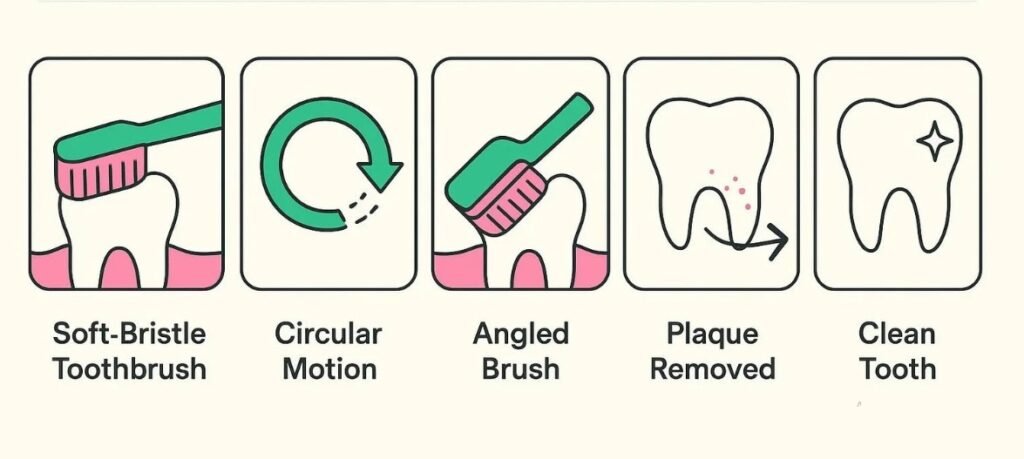
Switch to a soft-bristled brush immediately. This single change removes a major variable even before you adjust your technique.
Loosen your grip. Hold the brush more like a pen than a fist. If your hand or wrist feels tense while brushing, you’re very likely applying more pressure than necessary.
Re-learn the angle. Tilt the brush 45 degrees toward the gumline and use short, gentle, vibrating strokes — not long horizontal scrubbing motions across the whole tooth.
Let the bristles do the work, not your arm. Plaque is soft and comes off with light pressure; it doesn’t require force to remove.
Consider an electric toothbrush with a pressure sensor. Many models now include a built-in alert that lights up or pulses when you’re pressing too hard — genuinely useful for people who’ve brushed aggressively out of habit for years and can’t easily self-correct by feel alone.
Give it time, and expect some adjustment. A gentler technique can feel less “thorough” at first simply because it’s unfamiliar. That feeling fades within a couple of weeks as the new motion becomes automatic.
⚖️ Hard Brushing vs. Gentle Brushing
| Feature | Aggressive Brushing | Gentle/Correct Brushing |
|---|---|---|
| Bristle Wear | Frayed in 2 weeks | Lasts 3 months |
| Gum Line | Recedes/Retracts | Stays Stable |
| Root Exposure | High Risk | Low Risk |
| Feel | “Squeaky” but damaging | Clean and soothing |
What If the Damage Is Already Done?
If you’re already seeing a visible notch, exposed root, or persistent sensitivity, correcting your brushing technique is still the right first move — it stops the wear from progressing further. But it’s worth being honest: technique correction prevents future recession; it does not reverse tissue that’s already receded. That’s the point where a conservative care plan (desensitizing toothpaste, technique correction, monitoring) or, for more significant exposure, a conversation about professional treatment options becomes relevant.
Your Next Step
The fact that aggressive brushing is a habit — not a diagnosis — is genuinely good news. Habits can be corrected starting with your very next brushing session, at zero cost, with no dentist visit required. But knowing whether brushing mechanics alone explain what you’re seeing, or whether something else is contributing, is worth getting clear on.
Your teeth don’t need a scrub—they need care. Stop the damage before your roots are fully exposed.
👉For more evidence-based guides on gum health, visit the RecedingGumline.com.
Medical Disclaimer: This article is for informational purposes only. Consult your dentist to determine if your recession is caused by abrasion or periodontal disease.